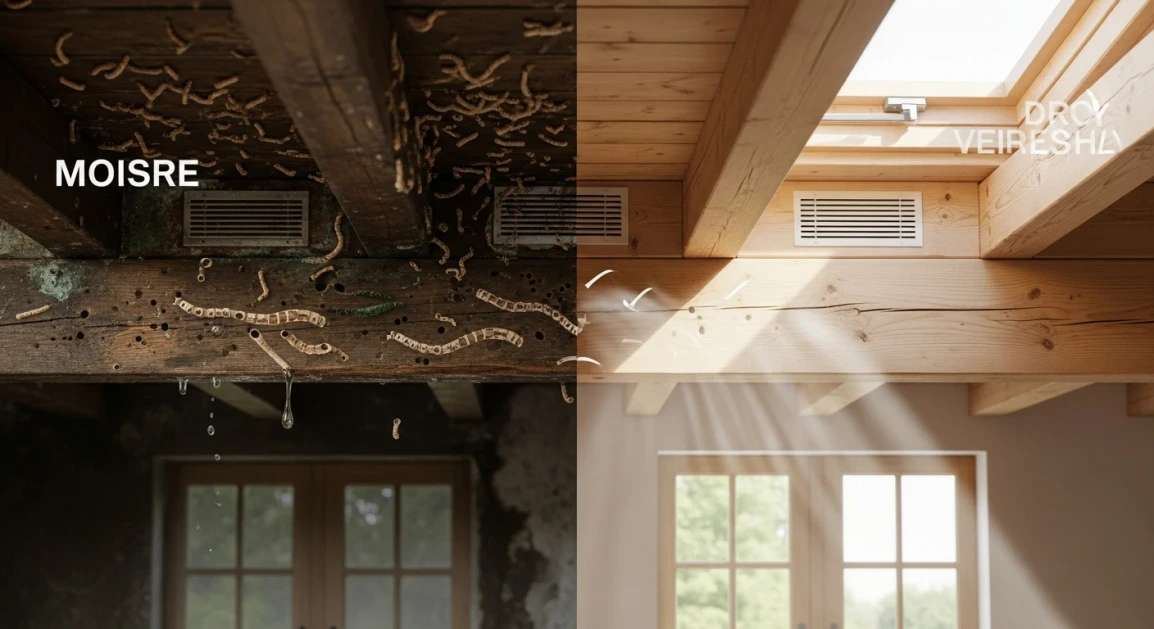
The Impact Of Moisture And Ventilation On Preventing Woodworm
Woodworm can be a real pain for wooden structures, especially when it’s damp. These little guys love to dig into wet wood, making it weaker with their tiny tunnels. If the wood stays damp, it’s like a buffet for them.
But if the wood’s dry, they don’t really like it much, and they slow down. So, keeping wood dry and well-aired can really help keep these pests away.
By making sure your place is nice and ventilated, you can cut down the chances of wood getting damaged. Up next, we’ll look at some easy ways to manage moisture and keep the air flowing to protect your wood.
Moisture’s Role in Woodworm Infestation
Too much moisture is like a welcome sign for woodworms. When wood gets soggy, it attracts beetles that want to lay eggs.
Wet or damp wood isn’t just appealing to woodworm larvae — they actually rely on it to survive. These little guys dig into the wood, munching on it and creating tunnels as they grow. This digging can mess up the wood’s strength and make a comfy home for the larvae.
But dry wood? Not so much. It doesn’t draw in these pests. So, keeping things dry is key to avoiding infestations. If you keep moisture levels below 20%, you might dodge the woodworm issue.
You can do this by checking with moisture meters, especially in places like basements and attics. Doing this helps keep your wooden stuff safe from these pesky critters.
Assessing Moisture Levels
To keep wood safe from woodworm, it’s key to keep an eye on how wet it is. Moisture meters are handy gadgets for this. They’ve got probes you stick into the wood to check for dampness, so you can spot trouble areas.
Key Areas to Test
- Basements: Being close to the ground makes basements pretty damp.
- Attics: Without enough airflow, attics can trap moisture, which woodworms love.
- Crawl Spaces: These spots usually don’t get much air, so they stay damp.
Frequency of Assessments
- Regular Checks: Check the moisture levels at least once every season. It might be smart to do it more often when it’s wetter, like in spring and autumn.
Actions if High Moisture is Detected
- Use Dehumidifiers: These can help dry things out.
- Improve Ventilation: Adding fans or vents can help get the air moving and keep the wood dry.
Effective Moisture Control Techniques
Moisture control is really important if you want to keep wood safe from woodworm. A dehumidifier is a great tool for cutting down indoor humidity.
Just make sure you choose one that matches your room size—larger spaces definitely need a more powerful unit. They’re especially useful in places like basements where dampness loves to hang out.
Good drainage around your home is also a big help. Keep those gutters clear so water flows away from your foundation instead of pooling up. You might even consider adding French drains or adjusting your garden slope to handle extra water better.
Another handy tip is sealing up any cracks and gaps to keep moisture out. A bit of sealant or caulk around windows, doors, and pipes can stop water from sneaking its way in. And don’t forget regular maintenance—it’s really important.
Check your plumbing, gutters, and dehumidifiers every month to ensure they’re all in good shape. Doing a thorough inspection of your home once a year can catch any problems before they grow. Taking care of these things early can save you a lot of hassle and cash later on.
So, why not start today? A little effort now can protect your home and save you plenty in the future. Keep your wood safe from those pesky woodworms!
Ventilation’s Impact on Woodworm Prevention
Proper ventilation is super important for keeping woodworms away by cutting down on moisture in your home.
Good airflow gets rid of the damp air from stuff like cooking and showering, stopping those wet spots woodworms love. Plus, bringing in fresh, dry air from outside makes your place way less tempting for them.
Improving airflow in these areas not only keeps woodworms away but also makes your home comfier and healthier to live in.
Preventing Woodworm Issues through Ventilation
Got woodworm issues? Improving your home’s ventilation can really make a difference. Try popping in some vents in places like the attic or basement. They allow fresh air to circulate and dry things out, keeping those pesky woodworms at bay.
If your kitchen or bathroom tends to get steamy, exhaust fans are a brilliant addition. They work wonders in removing moist air that woodworms love.
When the sun’s shining, why not crack open a window? It helps lower the humidity and gives your home a lovely fresh feel, which is fantastic for preserving the wood.
Make it a habit to check your vents regularly to ensure they’re clear and your fans are working properly. A quick clean now and then keeps the air flowing smoothly.
Following these tips not only helps ward off woodworms but also makes your home healthier overall. Spend a bit of time on ventilation, and you could save a bundle on repairs later.
It’s definitely worth the effort. So, why not have a quick look at your vents or open a window today and let in some fresh air?
Signs of Woodworm Infestation
Spotting woodworm early is your best bet to stop it from messing up your wooden things. Look out for tiny round holes in the wood, about the size of a pencil tip.
These holes are where beetles have made their escape, leaving behind a powdery mess called frass. You might find little piles of this stuff under the damaged wood, a definite sign that something’s up.
When checking for woodworm, give your wooden furniture, floorboards, and beams a good once-over. A torch can help you see into those dark corners, while a gentle poke with a screwdriver can reveal soft spots that might mean trouble inside.
Pay extra attention to damp areas like basements and attics since woodworms are particularly fond of these places.
If you notice any of these signs, act quickly. You could keep a watchful eye on things yourself or bring in pest control experts who know how to carry out effective woodworm treatment.
Tackling the problem swiftly can prevent it from spreading further, saving you a bundle on repairs and keeping your home safe. Why not make it a habit to check your home regularly? It’s a small effort that can make a big difference.
Conclusion
To keep woodworms away, ensure your home is dry and well-ventilated. These critters love damp spots, so reducing moisture and boosting airflow makes your space less appealing to them.
It significantly lowers the risk of an infestation and saves you hassle and money in the long run. Give it a try—your wood will last longer, and your home will be better protected.